Jemima Maria Murchie House
207 Eighth Street • Craftsman-style bungalow • Built 1927
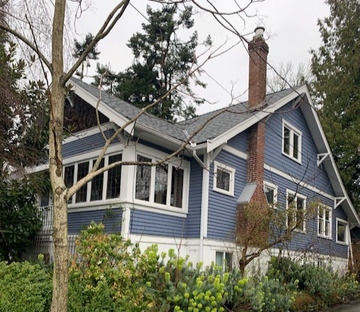
Situated in New West's Brow-of-the-Hill neighbourhood, this quaint 1927 bungalow was once home to city pioneer Jemima Maria Murchie. Known as Maria, she was the daughter of David Murchie, who owned and operated Murchie and Sons Funeral Parlours on Sixth Street near Columbia. This business marked the beginning of the Murchie family’s entrepreneurial ventures, which later grew to include the well-known Murchie’s Tea and Coffee Company.
Maria Murchie lived in New Westminster for 84 years and died in 1964 at the age of 97. In 1927, when she was 60, she purchased this newly built home and lived here until she required additional care. She then moved just across the lane to the beautiful house at 731 Queens Avenue, which had been converted to a nursing home, where she later passed away.
The house features characteristics of the late Craftsman style, including exposed beam ends and triangular braces beneath the roofline of the front gable and dormer. When originally built, the home had an unobstructed view of the Fraser River. After decades of surrounding development, the view is much different today, but one can still imagine Maria sitting on the porch on a summer evening (where the sunroom is now), enjoying the outlook.
As you enter the home, you are struck by the bright and airy feel of this cozy space. The house was designed to capture natural light, creating rooms that invite you to sit, relax, and visit.
The owners have taken care to make thoughtful choices in selecting paint colours that complement each room. The home remains largely true to its original plan, with only two major modifications: enclosing the sunroom and reconfiguring the kitchen. The design is a solid example of the modest bungalows of the 1920s and 1930s, with cross-hall plans that often included one or two bedrooms on the main floor and additional bedrooms upstairs.
The living room features the original brick fireplace and mantel, framed by matching built-in bookcases—details typical of the period. Much of the woodwork was originally left unpainted, and the current owners are in the process of restoring areas that were later painted. The kitchen and pantry area reflect the needs of a modern family, with a generous eating space overlooking the backyard and neighbouring homes, including the lovely gardens of the Hainsworth House across the lane (featured on the 2006 tour). The stained glass in the kitchen was reproduced to match the windows in the living room and den.
The enclosed staircase off the front hall leads to two spacious bedrooms. Note the original bevelled glass in the staircase door. Each bedroom includes large closets tucked under the roofline. The bathroom blends old and new elements, making creative use of space while maintaining the character of the home.
By Kathleen Langstroth