John W. (Jack) and Maureen West House
902 York Street • Mid-Century Modern • Built 1957 • Builder: Jack West
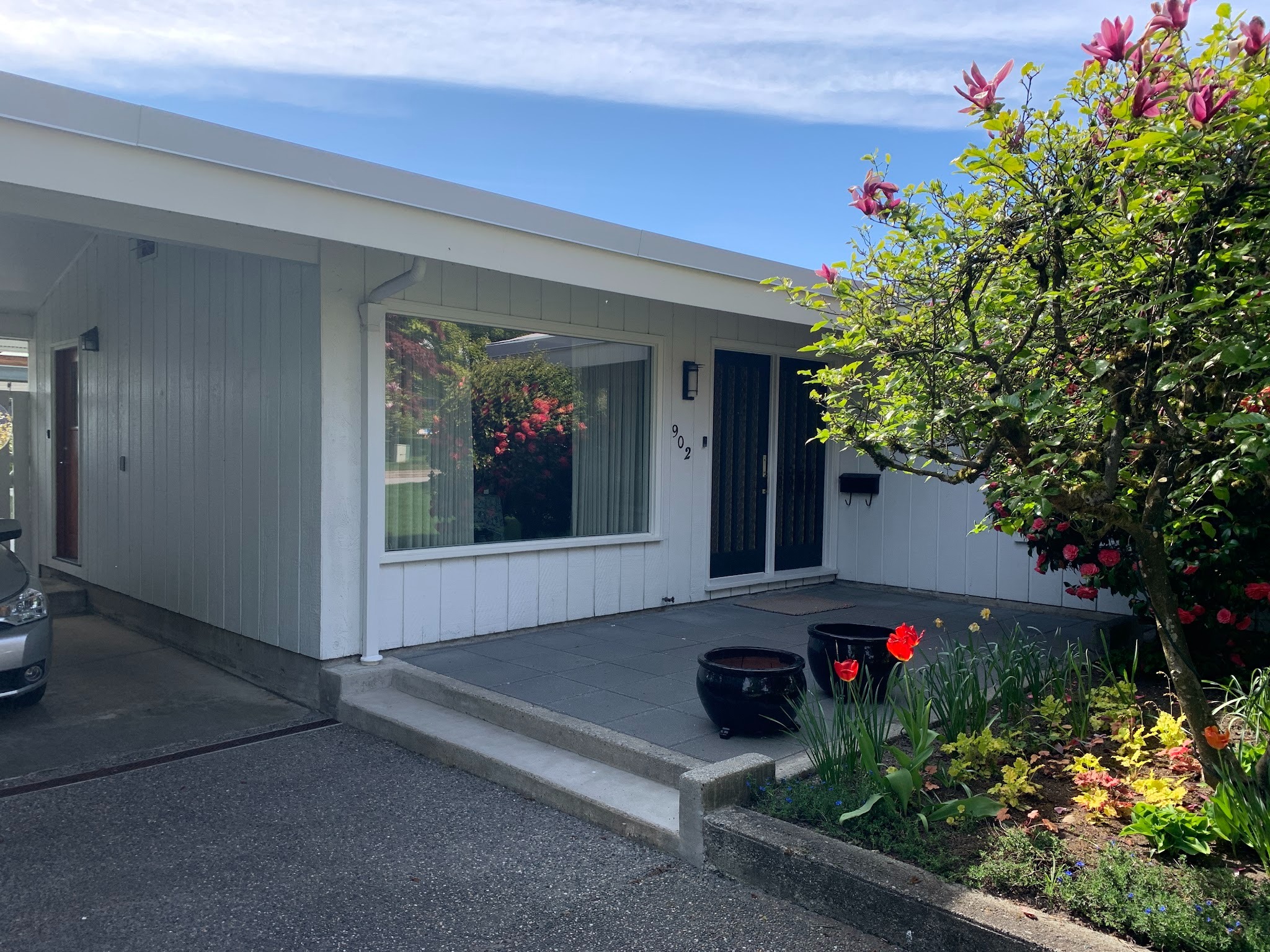
A mid-century modern home with unexpected flair, this 1957 residence blends practical design with striking original details—from crystal chandeliers to glitter ceilings—thoughtfully preserved through careful renovation.
The original owner, Jack West, built this house for his wife Maureen and their family in 1957. It is believed he modelled his floor plan, with some modifications, after a house plan featured in the October 1956 Popular Mechanics magazine. When the current owners purchased the house from him in 2003, Mr. West personally handed over his copy of the magazine, marked up to reflect the changes he planned (and ultimately made), adapting the design to suit the sloping site from the street front to the backyard.
Although the house’s bones are mid-century modern, there are interior elements that introduce a touch of unexpected elegance: the light-switch to the right of the entrance, the double front entry doors, the original crystal chandeliers in the hallway and dining room, and the glitter ceilings in the front rooms.
Soon after moving in the new owners replaced of all the windows with double glazed ones.
Restoration and Renewal (2007–08)
They started an ambitious renovation in 2007–08, repurposing, or replicating existing interior elements wherever possible. The exception was the original carpeting, which was removed and replaced with new flooring. Retained were the wood panelling and the built-ins in the back bedrooms -- complete with drawers, sliding doors, a desk, and a bookcase scaled for the West children.
Repurposed elements included wood panelling from the dining room wall, which was moved forward two feet to enlarge the kitchen, then reinstalled at the bottom of the stairs.
The kitchen’s prefabricated steel cabinets from Youngstown Kitchen, along with their original floral molded plastic laminate countertops, were relocated to the basement workshop. These iconic porcelain-enameled steel cabinets, produced by Mullins Manufacturing Corporation in Ohio from the 1930s to the 1950s, were a leading pre-fabricated and durable kitchen option during the post-war housing boom.
The kitchen update included the addition of recessed lighting and two skylights, along with sleek, white cabinetry that provides an abundance of storage. A backsplash of back-painted glass adds a warm, silvery ambiance.
The powder room and main bathroom were updated; with the latter being reconfigured as an ensuite.
Second Renovation (2013–14)
A second renovation was undertaken in 2013-14. The living room’s textured glitter ceiling was removed to add recessed lighting; the new ceiling replicated the original. A gas insert was installed in the existing fireplace, and new carpeting laid.
The most dramatic change occurred in the lower-level. Instead of building out to enlarge the basement, the owners dug down, excavating the crawl space, to create a games/AV room with storage area behind the reed glass wall. In the new room, there is a pair of unusual Cross Check™ chairs designed by renowned architect Frank Gehry and produced by Knoll.
Outdoor Features and Finishing Touches
After access for excavating was no longer needed, the back deck was rebuilt. The railing’s glass allows the owners to enjoy garden activity while sitting. The clothesline post is original to the house, as are the carport’s gate and panel of angled wooden slats. The reed glass at the top of the exterior wall was added for privacy, and echoes the glass inside.
by Anna Camporese