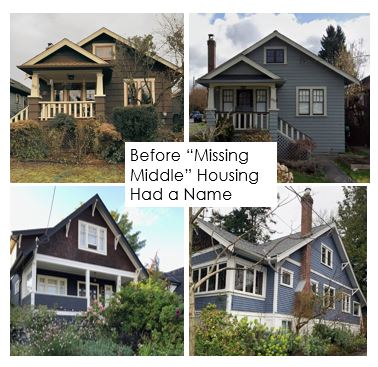
Before “Missing Middle” Housing Had a Name
May 19, 2026
What Four Heritage Homes Reveal About Housing Then -- and Now
As governments at all levels continue to debate housing affordability, density, and how to create livable neighbourhoods, four homes featured on this year’s New Westminster Heritage Homes Tour offer a reminder that many of today’s housing conversations are not entirely new.
Long before phrases like “missing middle housing” and “aging in place” entered the public vocabulary, residents of New Westminster were already experimenting with practical housing solutions, modest neighbourhood development, and independent homeownership.
Housing During Hard Times
Two of the homes featured on this year’s tour — the twin houses at 913 Tenth and 915 Tenth Street — were built during the Great Depression as modest rental properties for working families. Developed by Robert Edgar Douglas, a superintendent at a local lumber mill, the nearly identical Craftsman bungalows were designed to provide affordable, practical housing while still maintaining the character and craftsmanship associated with the era.
Finnish carpenter Theodore Skytte constructed the homes, which featured efficient layouts, durable materials, and welcoming front verandahs. A third house once stood behind the pair, forming a small cluster of rental housing on the site -- an early example of gentle neighbourhood density in New Westminster.
Nearly a century later, the homes remain highly livable examples of modest-scale housing that blended practicality with architectural character.
Women Building for Themselves
The tour also highlights two 1920s homes commissioned independently by women at a time when that was still relatively uncommon.
Jemima Murchie commissioned her home in her early fifties, while Eliza Chittick had her house built at age 60. Both decisions reflected remarkable independence and determination during a period when property ownership, financial autonomy, and major building decisions were still largely dominated by men.
Rather than grand estates, the homes reflected thoughtful, manageable living spaces designed for long-term comfort and security. In many ways, they anticipated contemporary conversations about aging in place, right-sizing, and creating homes suited to changing stages of life.
Historic Homes, Modern Questions
Together, the four houses reveal another side of heritage conservation. Beyond architectural styles and decorative details, historic homes can also tell stories about ordinary people responding to economic uncertainty, housing pressures, changing family needs, and evolving ideas about independence and community.
For Heritage New West, these stories are part of what makes heritage homes meaningful today.
“They remind us that good housing has always required creativity, practicality, and long-term thinking,” says Heritage New West director Bozana Djuric. “These homes were designed for real people and real lives -- and many of the issues they addressed remain surprisingly familiar today.”